
China to Train Pakistani Neurosurgeons and Establish Medical Tourism Center at Central South Hospital in Wuhan
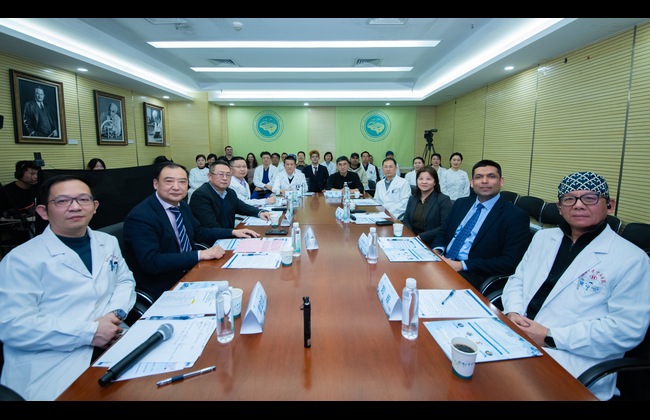
The China-Pakistan International Neurosurgery Forum was held at Zhongnan (Central South) Hospital of Wuhan University, marking an important step forward in strengthening bilateral medical cooperation between China and Pakistan. The forum brought together leading neurosurgeons, medical scholars, administrators and international students from China and Pakistan, creating a high-level platform for academic dialogue and practical cooperation. Its core focus was on neurosurgery clinical practice, joint training, scientific research collaboration and the broader vision of building a China-Pakistan health corridor under the framework of international medical cooperation.
The opening session was chaired by Professor Zhang Jianjian, Associate Director of Neurosurgery at Central South Hospital, who highlighted the importance of academic exchange in advancing complex medical disciplines such as neurosurgery.
In his welcoming remarks, Professor Hou Zuoyong, Deputy Party Secretary and Chief of Discipline at Central South Hospital of Wuhan University, warmly welcomed both domestic and international participants. He emphasized that international medical cooperation is not only essential for improving clinical standards, but also plays a critical role in talent development, technological innovation and global health governance. Professor Ji Li from the School of Journalism and Communication of Wuhan University and Professor Chen Jincao, President and Director of Neurosurgery at Central South Hospital, also addressed the gathering, examining China-Pakistan medical collaboration from the perspectives of cross-cultural communication and long-term disciplinary development. Both underscored the strong foundation and broad prospects for cooperation between the two countries.
A key highlight of the forum was the participation of Professor Azam Niaz, Chairman of Neurosurgery Department at King Edward Medical University, Pakistan, who joined online to deliver a comprehensive report on the current state of neurosurgery in Pakistan. He outlined existing clinical capacities, challenges faced by local hospitals, and future development needs. Professor Niaz expressed a strong desire to deepen routine communication with Central South Hospital, expand training and Research opportunities for Pakistani neurosurgeons in China, and strengthen cooperation in the management of complex neurosurgical cases. He also formally invited Professor Chen Jincao and his team to visit Pakistan for academic exchanges and live surgical demonstrations.
Dr. Muhammad Shahbaz, President of the China-Pakistan Medical Association, presented an in-depth overview of the “China-Pakistan Health Corridor: Opportunities, Challenges and Future Perspectives.” He analyzed Pakistan’s basic healthcare landscape, reviewed ongoing collaborative projects between the two countries, and discussed practical approaches to bridging differences between medical systems. His presentation highlighted the strategic importance of health cooperation within the broader Belt and Road Initiative, stressing that medical collaboration can serve as a vital pillar of people-to-people connectivity. Dr. Muhammad Shahbaz proposed the foundation of China-Pakistan Medical Tourism Center at Central South Hospital for the treatment of Pakistani patients and establishment of Telemedicine Center at Mayo Hospital of KEMU to facilitate the Pakistani Patients for communication and treatment options.
The academic session, chaired by Professor Zhao Wenyuan from the Department of Neurosurgery at Zhongnan Hospital, featured active discussions among participants. Professor Chen Jincao affirmed that China and Pakistan have already established a solid foundation for cooperation in neurosurgery and related disciplines, and noted that future collaboration should be more structured, sustained and innovation-driven. Additional online participants included Professor Ashraf Nizami, Chairman of International Relations of the Pakistan Medical Association, Associate Professor Muhammad Hammad Nasir from King Edward Medical University, and Mr. Sohail Chaudhry, CEO for Economic Affairs, alongside a large number of master’s and PhD international students, further enriching the forum’s academic depth.
The forum also showcased institutional achievements. Professor Ma Chao presented on behalf of the International Science and Technology Cooperation Base for Research and Diagnosis of Brain Gliomas in Hubei Province, highlighting advances in multidisciplinary diagnosis and treatment, as well as representative clinical cases. Professor Zhang Jianjian reported on the progress of the Cerebrovascular Surgery (Moyamoya Disease) Cooperation Base, demonstrating significant achievements in clinical outcomes, scientific innovation and international collaboration.
Looking ahead, participants agreed that China and Pakistan possess strong complementarities in medical resources, technology and human capital. Discussions focused on joint research projects, cross-border clinical collaboration, and the application of cutting-edge neurosurgical technologies. The forum concluded with Professor Chen Jincao’s closing remarks, in which he praised the academic value and practical impact of the meeting. He confirmed the five fellowships for Pakistani Neurosurgeons at Central South Hospital in Neurosurgery Training for short and long term basic and advanced Training. He reaffirmed that the Luojia Medical International Forum would continue to serve as a bridge for global medical exchange, deepen cooperation with Pakistan and other Belt and Road countries, and contribute Chinese expertise to global health development. The event not only strengthened neurosurgical ties between China and Pakistan, but also laid a solid foundation for long-term, high-quality medical cooperation.
The event was jointly advocated by Prof. Chen Jincao, President of the Brain Hospital at Central South Hospital of Wuhan University, and Prof. Dr. Muhammad Shahbaz, President of the China-Pakistan Medical Association, the forum was organized under the Luojia Medical International Forum (First Session). It was supported by the International Science and Technology Cooperation Base for Research and Diagnosis of Brain Gliomas and the Cerebrovascular Surgery (Moyamoya Disease) Base in Hubei Province, and co-organised by the School of Journalism and Communication of Wuhan University.
wtfvmkjxsgmolmgmvpqqnugsmxusqx
ororsfuhludlwipivqndpqdijxyuym